
St. Stephen's Shining Face
After St. Stephen, full of grace and fortitude, did great wonders and signs among the people, there arose men who opposed him from the synagogue. They persuaded witnesses to say that they heard him speak words of blasphemy against Moses and against God.1 They brought him before the council, and then they saw his face as if it had been the face of an angel.2
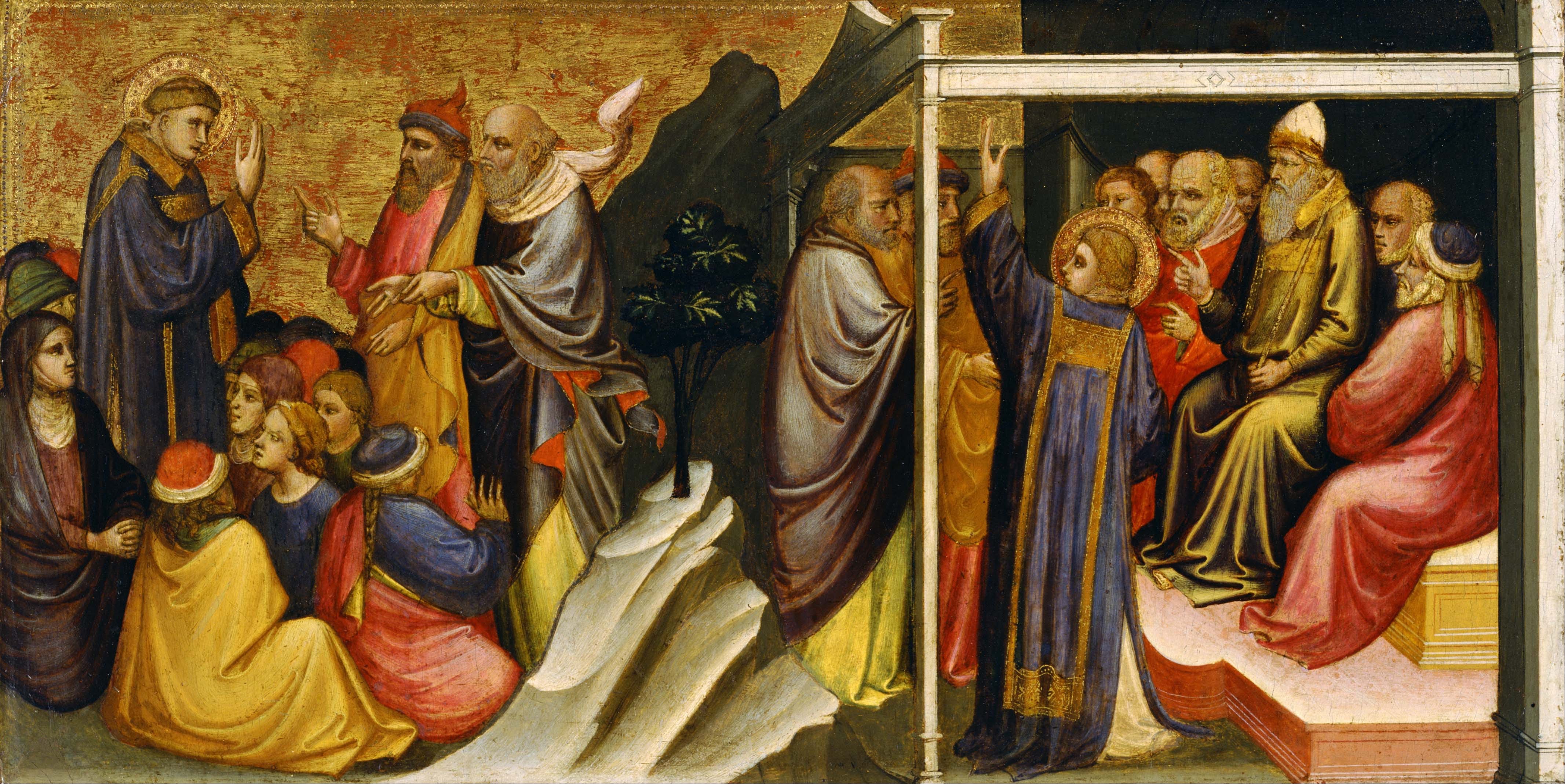
St. Stephen, Imitator of Blessed Moses
When Blessed Moses came down from Mt. Sinai, his face was shining from the conversation of the Lord.3
The people came to him, and he spoke to them,4 and he gave them in commandment all that he had heard of the Lord.5 And they saw that the face of Moses when he came out was shining.6 The synagogue that put St. Stephen on trial was accusing him of “speak[ing] words of blasphemy against Moses.” But the God of Moses gives the council the sign of Moses: they saw Stephen’s face shining.
“For this was his grace, this was the glory of Moses.”—St. John Chrysostom7
St. Stephen tells the council:
[Moses] said to the children of Israel: A prophet shall God raise up to you of your own brethren, as myself: him shall you hear. —Acts 7:37
St. Stephen tells them that they did not hear this Prophet like Moses, but that they rejected Him, and have been betrayers and murderers of the Just One.8
St. Stephen calls the council stiffnecked and uncircumcised in heart and ears,9 echoing the words of the book of Exodus, where the Lord said to Moses: See that this people is stiffnecked.10 Blessed Moses interceded for the people, and God heard his prayer.11 St. Stephen prays for his persecutors, and God hears his prayer.12
St. Stephen is shown to be speaking, not against Blessed Moses, but rather in harmony with him. Bl. Dennis the Carthusian says that when St. Stephen’s beholders received this sign of the shining face, they “had an opportunity of being converted, had they so wished, or were rendered inexcusable for their neglect.”13
St. Stephen, Imitator of our Lord
Just as St. Stephen was conformed to our Lord by a participation in grace (see last post), he was an imitator of our Lord in at least four other respects.
He was an imitator of our Lord in his performance of miracles among the people. He was an imitator of our Lord in his preaching to the synagogal council. He was an imitator of our Lord in that he loved and prayed for his persecutors. And he was an imitator of our Lord in his shining face.
We read that on the mountain, with Peter, James, and John, the Lord Jesus was transfigured before them, and his face did shine as the sun.14
“This same miracle is not recorded to have happened to any other but Moses, and our Lord at his transfiguration.” —Bl. Denis the Carthusian15
Spiritual Application
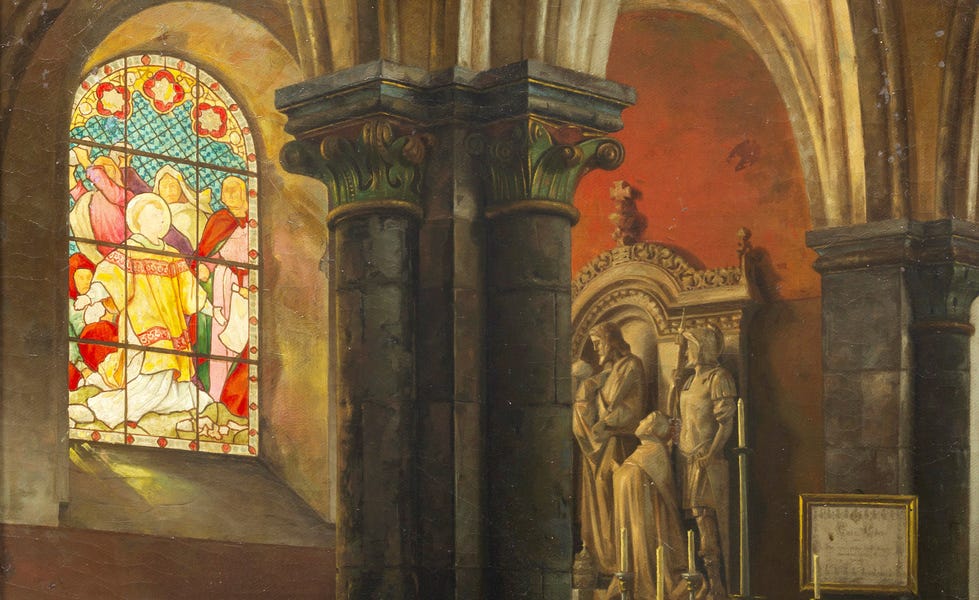
First, this reminds us of the value of prayer. The shining face of Moses came from his conversation with God. Bl. Denis says that the shining face was because of St. Stephen’s purity and innocence. He was disposed to such graces as we discussed in the previous post. These graces were gifts from God Who is ready to give to those who ask. While we only read of Bl. Moses, the Lord Jesus, and St. Stephen having this miracle of the shining face in Sacred Scripture, we know that this sign,
…in an inferior degree, has been not unfrequently observed in the constant and cheerful countenance of the martyrs before their persecutors, and of privileged saints, whilst they were happily employed in their intimate communications with heaven —Haydock16
For there are, yes, there are faces full-fraught with spiritual grace, lovely to them that love, awful to haters and enemies. —St. John Chrysostom17
Second, the shining face of St. Stephen reminds us of the surpassing goodness of the New Covenant. St. Paul tells us that we use much confidence… not as Moses [who] put a veil upon his face.18 In the New Covenant are all beholding the glory of the Lord with open face.19 Even when our eyes do not see this visible light, Divine Revelation tells us that the glory of the New Covenant is greater than the Old. Antiquum documentum novo cedat ritui.
Third, the face of St. Stephen reminds us of the virtue of Hope. The road is not easy to life eternal. St. Stephen walked the arduous way of martyrdom with shining face, seeing Him Who died for us: I see the heavens opened, and the Son of man standing on the right hand of God.20 Our hope is to behold God. He is All our Happiness. Through grace, the seed of glory, in the light of Faith, in the certainty of Hope, and in the fire of Charity, we now begin to see, as through a glass dimly.
If we remain in Jesus, (may it please Him) we hope to say with St. Stephen, “Lord Jesus, receive my spirit”21, and to see Face to face.
This is part II of a series. Read part I here:

Acts 6:11
Acts 6:15
Exodus 34:29
Exodus 34:31
Exodus 34:32
Exodus 34:34
St. John Chrysostom, Homily XV on Acts
Acts 7:53
Acts 7:51
Exodus 32:9
Exodus 32:9
Acts 7:59
Bl. Denis, as quoted by Haydock, Acts Commentary
Matthew 17:6
Bl. Denis, as quoted by Haydock, Acts Commentary
Haydock, Acts Commentary
St. John Chrysostom, Homily XV on Acts
2 Corinthians 3:12
2 Corinthians 3:18
Acts 7:55
These words of St. Stephen are echoed nightly at Compline, which we looked at here:

