
Notes on Compline
Night Prayer in the Office

I want to share a few notes on Compline, or Night Prayer.
Compline, being a part of the The Liturgy of the Hours, teaches us to “adore God the Father in spirit and in truth” and “can contribute in no small degree to the salvation of the whole world.”1 King St. Louis IX prayed Compline with his children after dinner every day, according to William of Nangis.2
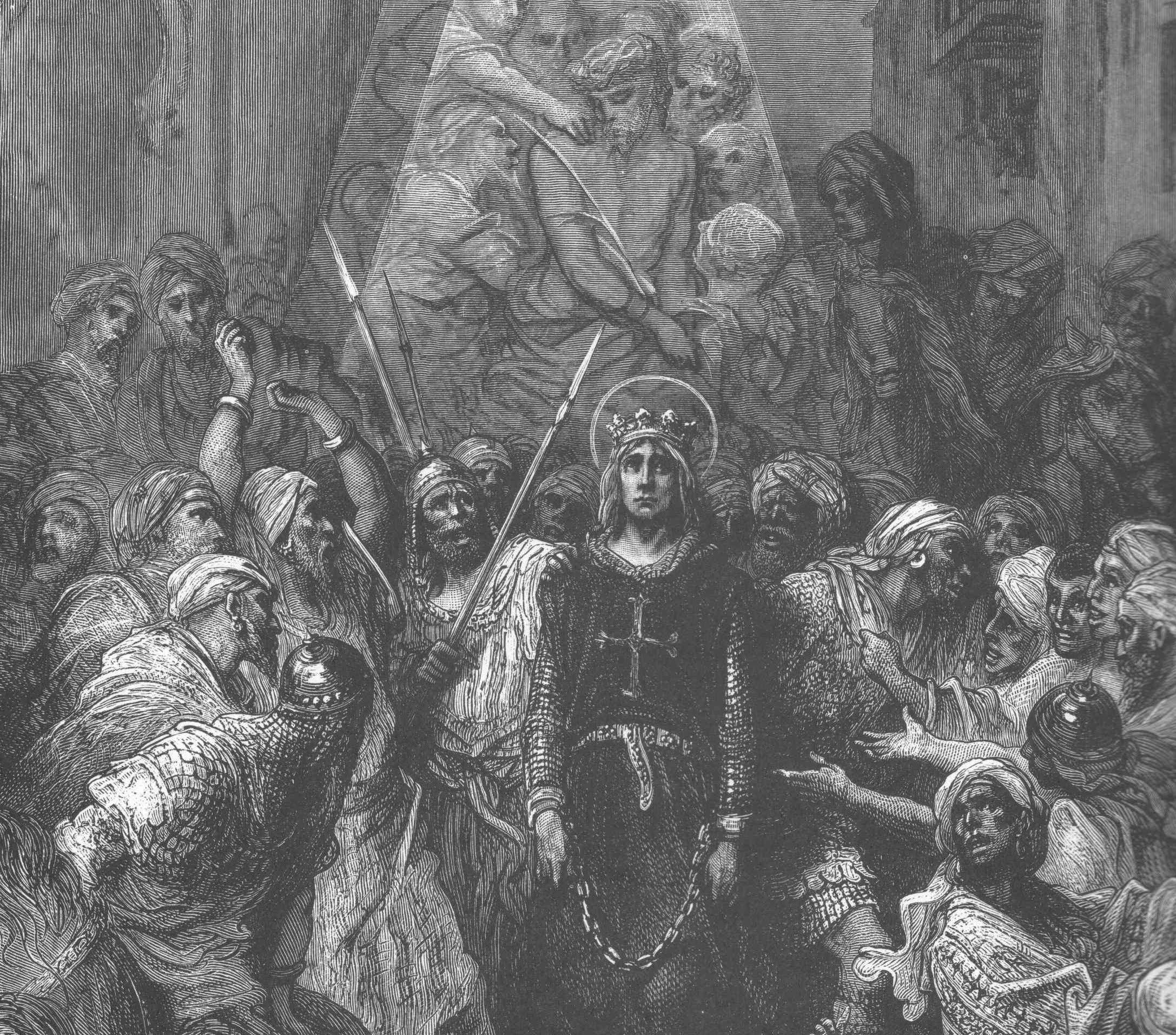

Scholars place the origin of this hour as a distinct liturgical expression with St. Benedict or St. Basil, but a prayer before sleep clearly predates them both. Here are the parts as they exist in the latest revision of the Office in the Roman Rite, The Liturgy of the Hours: Opening, Examination of Conscience, Hymn, Psalmody, Reading, Responsory, Canticle of Simeon, Conclusion, Marian Antiphon. We will look at a few of these parts (those I have put in bold) for their spiritual significance.
Examination of Conscience
What is the significance of having a prayer time right before bed? It is a natural time to pray, as the physical necessity of sleep forces us to stop other occupations. The voices of the day die down, and the voice of conscience remains.
We can recall these words of our Lord in the 9th chapter of St. John’s Gospel: venit nox quando nemo potest operari. “The night is coming when no one can work.” Each night reminds us of the night of our death, when there is no longer opportunity for merit or demerit, but the night also turns our attention to the Light of the World: Christ, with Whom “even the darkness is not dark”3.
We bring our conscience before that Light, that we might examine it, thank God for the many graces received that day, be contrite for the sins we have committed, and ask for His pardon and healing in an act of love and contrition. This is such an important part of the day. From the Catechism of Pope St. Pius X:
59 Q. Is it well to make an act of contrition often?
A. It is well and most useful to make an act of contrition often, especially before going to sleep or when we know we have or fear we have fallen into mortal sin, in order to recover God’s grace as soon as possible; and this practice will make it easier for us to obtain from God the grace of making a like act at time of our greatest need, that is, when in danger of death.
The Psalmody
After the Hymn comes the Psalms. St. Alphonsus Ligouri writes:
St. Gregory Nazianzen says, that the chanting of the Psalms is a prelude of the praises with which the Saints honour God in heaven… [we] take possession of heaven, inasmuch as we discharge the same duty as the inhabitants of that blessed country.4
The Psalms are given to us to praise God, and make acts of love:
How many acts of love, of confidence, of humility, of contrition, may one not make by merely paying attention to the verses that one recites! Above all, what beautiful prayers are found in each psalm! There is no doubt that, when recited with faith and fervor, they merit treasures of grace, according to the infallible promise made by our Lord that he would hear whoever prays to him : Ask, and it shall be given you. For every one that asketh, receiveth.5
The Psalms, or, at least those prayed on Sunday (4, 91, 134, 31), have been part of Compline since antiquity. In them, we pray many glorious things:
We lift up our hands to the holy places (134:3). We repent on our bed for any anger (4:5), we offer to God an evening sacrifice of justice (4:6), we are glad in the Light of God’s countenance (4:7,8), we lay down in peace and sleep, constituted in hope by God (4:8). We trust under His wings (91:4), unafraid of the terror of night (91:5) or the business that walketh about in the dark (91:6). We rest in God’s promise of length of days and in His salvation (91:16).
The In Manus Tuas Responsory
Into Your Hands, O Lord, I commend my spirit.
This was originally prayed by King David in Psalm 31, and repeated by our Lord on the Cross. Why do we pray it here?
David placed all his hope of salvation in his future Redeemer, and said: Into Thy hands, O Lord, I commend my spirit; Thou hast redeemed me, O Lord, the God of truth…But how much more ought we to place our confidence in Jesus Christ, now that he has come, and has accomplished the work of redemption! Hence each one of us should say, and repeat again and again with greater confidence: Into Thy hands, O Lord, I commend my spirit; Thou hast redeemed me, O Lord, the God of truth.” —St. Alphonsus Ligouri6
By praying this, we also unite ourselves to many of the servants of God who have gone before us, especially the glorious company of the martyrs:
These solemn words of our dying Saviour have been, in all ages, and in all lands, the death prayer of many of those whom He redeemed, with the great price. St. Stephen, the proto-martyr, prayed “Lord Jesus receive my spirit.” “Into Thy hands I commend my spirit,” prayed St. Basil in his death agony. “Into Thy hands I commend my spirit,” prayed thousands of God’s servants, heroes and heroines… —Rev. E.J. Quigley7
The Nunc Dimitis of Blessed Simeon
We read in St. Luke’s Gospel about Blessed Simeon, a man “just and devout”, who was “waiting for the consolation of Israel.”
He came by the spirit into the temple. And when His parents brought the child Jesus to do for him according to the custom of the law. He also took Him in his arms and blessed God and said ‘Now thou dost dismiss thy servant, according to thy word in peace…8
Paul Rose from Sing the Hours says that every night in Compline we get a “mini-Candlemass”: a miniature version of the Feast in February on which we celebrate the Presentation of Jesus Christ in the Temple. In that Feast, it is chanted, senex Púerum portábat: Puer autem senem regébat: “The old man carried the Child: but the Child ruled the old man.”9
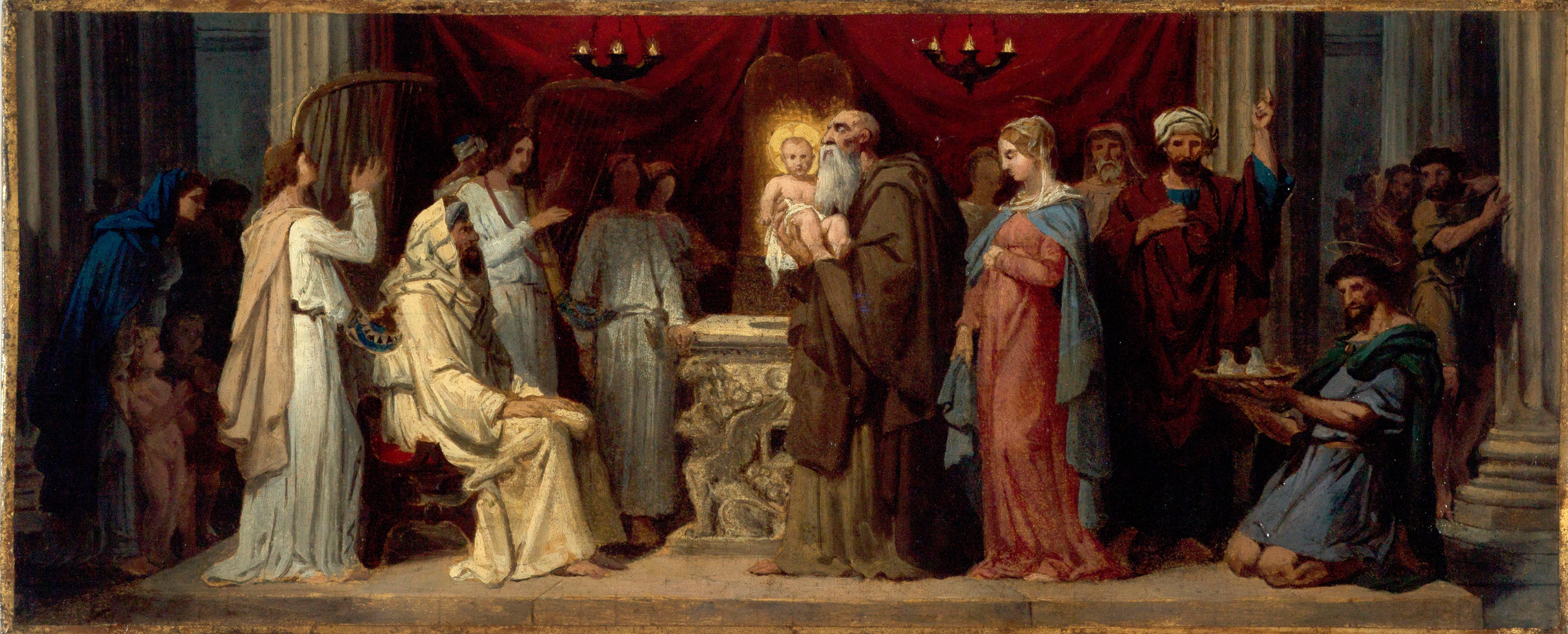

We are invited to imitate Blessed Simeon’s readiness to die. We read that et venit Simeon in Spiritu, “Simeon came in the Spirit” to the temple. Let our death be the happy and restful death of Simeon, beholding Christ. St. Alphonsus comments:
Cornelius a Lapide says that this canticle is recited every evening, to remind us of death before sleep, which is the image of death, and in order that we may prepare for it by desiring it, after the example of St. Simeon.10
The Marian Antiphon
There has already been something Marian about the last few parts of of Compline. In the Nunc Dimitis, when we remembered blessed Simeon holding the Child Christ, the Blessed Virgin Mary was there, faithfully presenting Christ in the temple, storing up the prophecies in her heart. At the In Manus Tuas, when we remembered our Lord’s Passion, the Blessed Virgin Mary was present: standing at the foot of the Cross.
The Marian Antiphons: Alma Redemptoris Mater, Ave Regina Caelorum, Regina Caeli, and Salve Regina11, which rotate through the liturgical year, are some of the most beautiful poems ever written.
Now we come to the close of Compline. We have turned to the Triune God in repentance. We have joined, for a while, the unceasing chorus of Seraphim in praising Him. We have joined the Church Militant in praying the Psalms. We have joined our prayer to the words of our Crucified Lord on the Cross. In the last antiphon we ask the Blessed Virgin Mary, Help of Christians, for her intercession, especially to obtain the grace of a happy death.
Then we enter silence and go to sleep. There is nothing left to say.
General Instruction of the Liturgy of the Hours 27
L’Abbe Bacquez, The Divine Office, Considered from a Devotional Point of View. pg. 543
Psalm 139:12
St. Alphonsus Ligouri, Discourses on the Holy Sacrifice of the Mass, and on the Divine Office, pg. 128
St. Alphonsus Ligouri, The Complete Ascetical Works of St. Alphonsus, Vol. 14. pg. 27
St. Alphonsus Ligouri, The Complete Ascetical Works of St. Alphonsus, Vol 6.
Rev. E.J. Quigley, The Divine Office: A Study of the Roman Breviary
Luke 2:29-33
Translation of the Senex Pueram from this blog.
St. Alphonsus Ligouri, The Complete Ascetical Works of St. Alphonsus, Vol. 14. pg. 517
Ave Regina Coelorum “appears to be of monastic origin, and St. Jerome attributes it to St. Ephraem.” Rev. E.J. Quigley, The Divine Office: A Study of the Roman Breviary, pg. 225
“The use of the [Salve Regina] anthem at Compline was begun by the Dominicans about 1221 and the practice spread rapidly…It was especially obnoxious to Luther, who several times denounced it, as did the Jansenists also.” Ibid, pg. 226
Incredible dive into the Compline. This changes the way I view sleep, and the moments just before it. Thank you for writing this, brother 🙏
Love this, Compline is one of my favorite hours. It's especially beautiful in Latin.