
Two Cities and Two Men
A Poem

The knowledge of two cities and two men
Possessing, I am thus and promptly bound
With brotherly affection now to pen.

Canto I: The First Man, and His City

One man and city daily doth surround
All creatures that abide on earth and sea,
And, as a jailer, firmly doth impound

The multitude, respecting not degree.
The man thou knowest well, for of his kind
Thou art. The Schoolmen with me do agree.

Dost thou believe me not? Then seek and find
Thy letters from the school of thorny life
Where with the sweat of brows thy bread is brined.

And what the conduct of his sons and wife?
They surely followed in the ills of him
Who as their head succumbed to snake and strife.

If thou still doubtest Adam’s story grim,
The city see in which thou art employed!
Thy residence is in those alleys dim!

For such a town a toponym deploy
Like Sodom, Babel, Babylon the Whore.
To spread temptation is her solemn joy.

These were domains of Adam once before,
But brown’d they were in Eden’s garden green.
Now sons are born as thralls to Death abhorred.

See walls upheld by lending, loan, and lien!
With Abel’s blood are watered all the fields!
The Town of Man: a polity obscene.

Canto II: The Second City, and the Second Man

But Lo! Another City coming down
From Heaven, gilt with gold to those who see
With intellects that bear the Faith as crown,

And wills made fire by perfect charity.
This City great to Abraham was sworn,
With word and oath for hope’s posterity,

That all the sons of faith and stars of morn
May life replete obtain. Her walls are called
Salvation, Precious, Free of Every Thorn.

Within the walls the people are enthralled
By life and Life’s Reward, for Death hath gone.
Foundations everlasting are installed.

For better use of rocks than tombs hath dawned!
A better country far for Rachel’s bones!
A City made of rich carnelian,

And em’rald, beryl, topaz: precious stones.
But Who is King and Man of such a place?
And who can think to dwell within such homes?

Why, He who truly took on Adam’s face:
Our nature, in all ways excepting sin,
The Second Man that gave the devil chase

And opened Eden to His creature-kin.
His City hath a River running clear
Beside a Tree to heal thy leprous skin.

Get up my friend, the time is drawing near,
When only one Man’s City will remain.
So shed the sins of Babylon, and tears

Of love’s contrition; Be reborn within.
His City’s River reacheth even here,
His crosséd tree still shadeth sinful men.

The Love that turneth all the starry spheres
Can turn you to a son of God again.
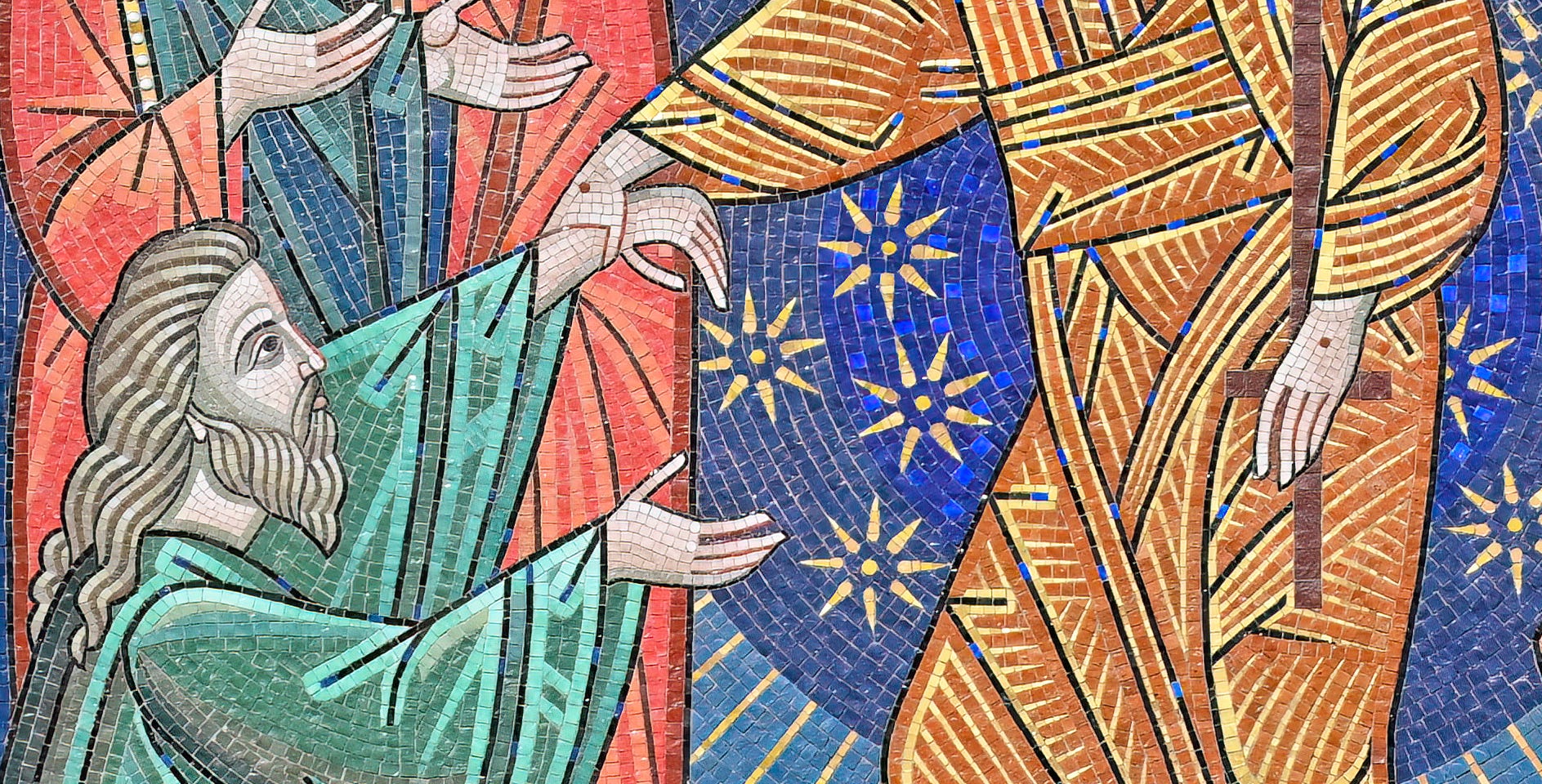

Thank you for reading this poem. It is a terza rima (the poetic form used in Dante’s Divine Comedy) in Early Modern English. It draws on imagery from various parts of Sacred Scripture (Genesis, the Prophets, the Apocalypse of John, and the Epistle to the Hebrews) and from the end of Dante’s Paradiso, to reflect on the mystery of our redemption explained by St. Paul:
Therefore, as by the offence of one, unto all men to condemnation; so also by the justice of one, unto all men to justification of life. For as by the disobedience of one man, many were made sinners; so also by the obedience of one, many shall be made just. —Romans 5:18-19, DR
Gave a terza rima a shot. I’ve read terza rima’s from Substack Authors @Anthony Esolen and @Kate Bluett, hopefully this one is in the ballpark.
@J. Tullius, @Solum Literary Press, would this align with either of your poetry projects?